Carlyle House Alexandria VA Unveiled Its Historic Grandeur
Table of Contents
- Carlyle House Alexandria, VA: A Monument to 19th-Century Aristocracy and Architectural Elegance
- Origins and Historical Timeline: From Merchant’s Vision to Cultural Landmark
- Architectural Breakdown: Georgian Revival Grandeur and Distinctive Design Features
- Carlyle House in Alexandria’s Social and Cultural Landscape
- Comparative Analysis: Carlyle House vs. Other Historic Mansions in Alexandria
- Carlyle House Today: A Blend of Historic Preservation and Modern Engagement
- Ownership and Management: Stewardship of a Historic Landmark
- Guided Tours: Exploring Carlyle House Through Thematic Narratives
- Seasonal Events and Special Programs
- Carlyle House in Pop Culture and Media: A Cinematic and Cultural Icon Across Eras
- Silent Films and Early 20th-Century Photography: Carlyle House as a Gilded Age Backdrop
- Literature and Documentaries: Carlyle House as a Character in Historical Narratives
- Modern Media Appearances: From TV Cameos to Viral Commercials
- Timeline of Carlyle House’s Media Appearances by Decade
- Weddings, Photoshoots, and Corporate Events: Carlyle House Exploring Nearby Attractions: A Day Trip Guide Around Carlyle House, Alexandria, VA Carlyle House stands as a jewel of 19th-century architecture in Alexandria, Virginia, but its allure extends beyond its historic walls. The surrounding neighborhood and nearby attractions offer a rich tapestry of cultural, culinary, and outdoor experiences that enhance any visit. Whether seeking immersive history, scenic landscapes, or gastronomic delights, the area surrounding Carlyle House provides a seamless blend of heritage and modernity. This guide organizes nearby attractions by theme, walking routes, dining options, and seasonal events to create a well-rounded day trip experience. Must-Visit Attractions Within a 10-Minute Drive
- Walking and Biking Routes from Carlyle House
- Curated Dining and Café Experiences Near Carlyle House
- Combining Carlyle House with Broader Alexandria Experiences
- Behind the Scenes: The People and Stories of Carlyle House
- Prominent Residents: Lives of Aristocracy in Carlyle House
- Lesser-Known Tales: Ghosts, Secrets, and Hidden Spaces
- Comparative Lifestyles: Wealth vs. Labor in 19th-Century Alexandria
- The Unsung Hands: Servants, Artisans, and Their Roles
- Timeline Infographic: Key Figures and Their Legacy
- Photography and Visual Storytelling: Capturing Carlyle House’s Beauty Through the Lens
- Optimal Angles and Times of Day for Exterior Photography
- Equipment and Camera Settings for High-Impact Imagery
- Iconic Photo Spots Near Carlyle House and Storytelling Compositions
- Interior Photography Guidelines During Tours
- Creative Photography Projects Featuring Carlyle House
- Dos and Don’ts of Photographing Carlyle House
Nestled along Alexandria Virginia’s storied streets, Carlyle House stands as a silent witness to over a century of aristocratic splendor, silent films, and Gilded Age extravagance. Built in 1906 by industrialist William Carlyle, the mansion’s Georgian Revival architecture once hosted presidents, artists, and Washington’s elite, its grand halls echoing with laughter, debates, and whispered secrets. Beyond its ornate columns and stained-glass windows lies a narrative of preservation battles, media fame, and community pride—where every brick holds a story waiting to be uncovered.
Today, Carlyle House transcends its role as a relic of the past, serving as a living classroom, a cinematic muse, and a cultural landmark that draws history buffs, photographers, and curious travelers alike. From its early days as a backdrop for silent films to its modern reinvention as a hub for educational tours and seasonal events, the mansion remains a cornerstone of Alexandria’s identity. Yet, its true magic lies in the interplay between its opulent history and the vibrant neighborhood that surrounds it—a place where the past feels tangible and the future continues to be written.

Carlyle House Alexandria, VA: A Monument to 19th-Century Aristocracy and Architectural Elegance

The Carlyle House stands as a testament to Alexandria, Virginia’s golden era, when the city thrived as a hub of Southern aristocracy, commerce, and cultural refinement. Built in 1813 by John Carlyle, a prosperous merchant and tobacco planter, the mansion embodies the Georgian Revival style, a hallmark of American elite residences during the early 19th century. Its construction coincided with Alexandria’s rise as a vital port city, connecting the Chesapeake Bay to the Potomac River and fostering an affluent class eager to display their wealth through grand architecture. Beyond its aesthetic appeal, Carlyle House served as a social epicenter, hosting lavish balls, political gatherings, and intellectual discussions that shaped the region’s social fabric. The mansion’s preservation today offers a window into the opulent lifestyles of the pre-Civil War elite, as well as the architectural innovations that defined American aristocratic living.
Origins and Historical Timeline: From Merchant’s Vision to Cultural Landmark
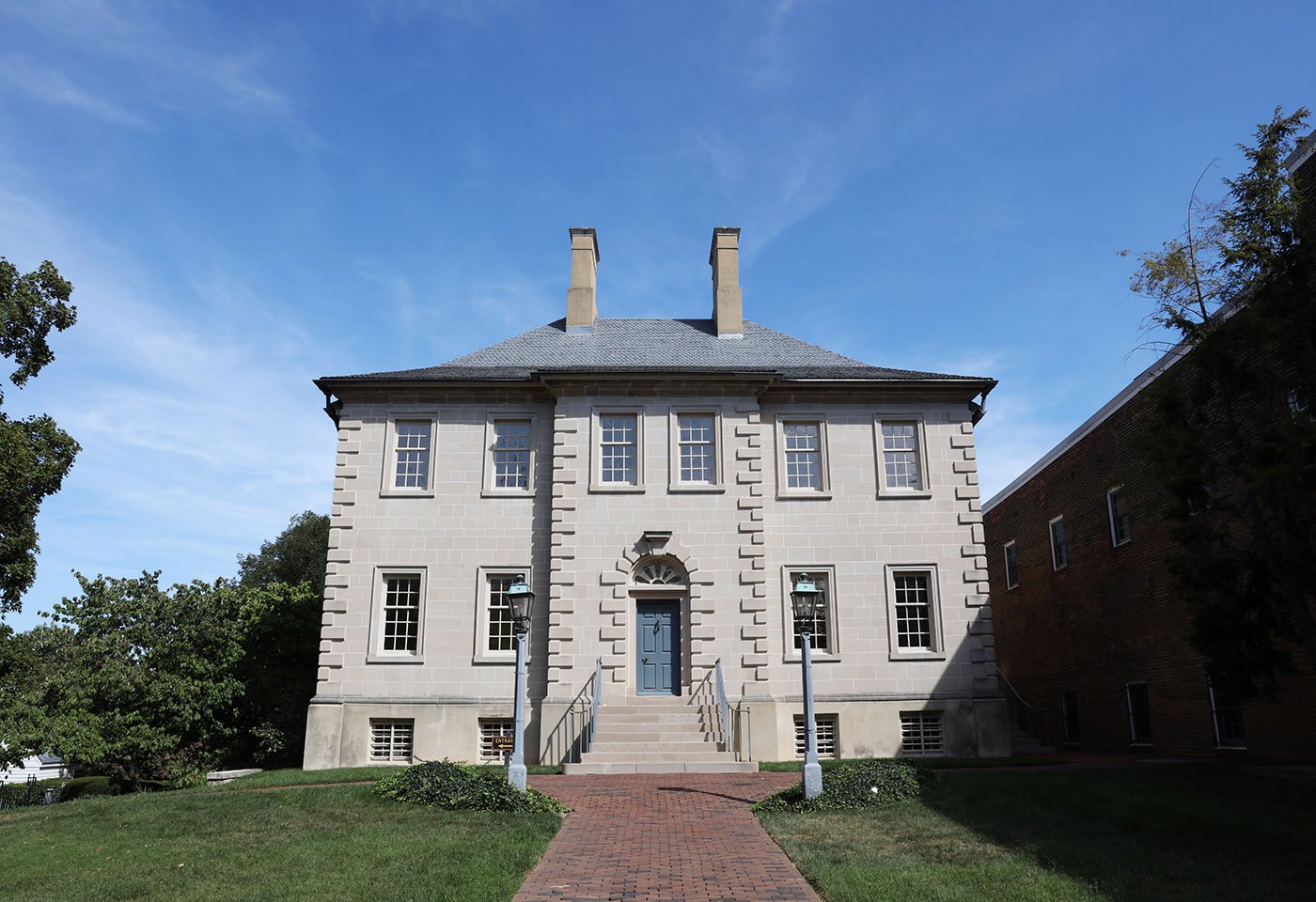
Carlyle House’s history is intertwined with Alexandria’s transformation from a modest tobacco-trading village into a cosmopolitan Southern city. The mansion was commissioned by John Carlyle, a Scottish-born merchant who amassed wealth through tobacco exports and real estate ventures. Construction began in 1813, a period when Alexandria’s economy flourished due to its strategic location along the Potomac. The house was completed in 1815, just as the city’s population swelled with European immigrants and wealthy Southern planters seeking proximity to Washington, D.C.
Over the decades, Carlyle House underwent several ownership changes, each reflecting the shifting economic and social dynamics of Alexandria. In 1842, the mansion was purchased by William Wilson Corcoran, a financier and philanthropist who later founded the Corcoran Gallery of Art in Washington, D.C. Under Corcoran’s ownership, the house became a center for high society, hosting lavish parties attended by politicians, artists, and industrialists. The Civil War (1861–1865) marked a pivotal moment in the mansion’s history, as Union forces occupied Alexandria, and the house briefly served as a military headquarters. Post-war, Carlyle House remained a private residence until 1969, when it was acquired by the Alexandria Historical Society and restored to its former glory.
The mansion’s survival is attributed to its adaptive reuse and the efforts of preservationists who recognized its cultural significance. Today, it operates as a house museum, offering guided tours that delve into its architectural splendor and the lives of its inhabitants.
Architectural Breakdown: Georgian Revival Grandeur and Distinctive Design Features
Carlyle House exemplifies the Georgian Revival style, a popular architectural movement in the United States during the late 18th and early 19th centuries, inspired by the symmetry and elegance of English Georgian architecture. Designed by an unknown architect (likely influenced by local builders of the era), the mansion features a five-bay façade, a hipped roof with dormer windows, and a two-story portico supported by fluted columns—a hallmark of Georgian Revival design.
The exterior is constructed from brick and stucco, with white-painted woodwork that accentuates its symmetrical proportions. The central entrance is flanked by sash windows with six-over-six panes, a common feature in Georgian Revival homes that allowed natural light to flood the interior. Inside, the mansion boasts high ceilings, fireplaces with marble mantels, and intricate woodwork, including paneled walls and crown molding. The grand staircase, a focal point of the first floor, ascends to the second level, where guest bedrooms and receiving rooms were once located.
One of the mansion’s most distinctive features is its ballroom, a spacious room with a coffered ceiling and floor-to-ceiling windows that once illuminated lavish dances. Over time, modifications were made to accommodate changing tastes, such as the addition of Victorian-era details in the late 19th century, including elaborate wallpaper and stained glass. Despite these alterations, the core Georgian Revival structure remains intact, preserving the mansion’s historical authenticity.
Carlyle House in Alexandria’s Social and Cultural Landscape
During its peak in the antebellum era, Carlyle House was more than a residence—it was a symbol of status and a catalyst for social engagement. The mansion hosted grand balls, where elite families from Alexandria and Washington, D.C., gathered to dance, dine, and forge political alliances. One of the most notable events was a ball in 1842, attended by President John Tyler, who was then residing in the nearby Octagon House. Such gatherings were not merely entertainment; they were strategic displays of wealth and power, reinforcing the social hierarchy of the time.
Beyond social events, Carlyle House played a role in intellectual and cultural exchanges. William Wilson Corcoran, its most famous owner, was a patron of the arts, and the mansion often hosted lectures, musical performances, and literary salons. The house’s proximity to Washington, D.C., made it a convenient retreat for politicians and diplomats, further cementing its place in the region’s cultural landscape.
The mansion’s influence extended beyond its walls, contributing to Alexandria’s reputation as a refined Southern city. Its architectural style and social functions mirrored those of other elite residences in the region, such as Monticello in Virginia and The White House (then known as the Presidential Mansion). However, Carlyle House’s urban setting distinguished it from rural plantations, reflecting the unique blend of commercial prosperity and aristocratic ambition that defined Alexandria.
Comparative Analysis: Carlyle House vs. Other Historic Mansions in Alexandria
Alexandria’s historic district is dotted with mansions that reflect the city’s layered past, each with distinct architectural styles and cultural legacies. Below is a comparative table contrasting Carlyle House with three other notable historic homes: Torpedo Factory Art Center, Huntley House, and the Octagon House.
| Feature | Carlyle House (1813) | Torpedo Factory Art Center (1887) | Huntley House (1758) | Octagon House (1800) | ||||||||||||||||||||||||||||||||||||||||||||||||||||||
|---|---|---|---|---|---|---|---|---|---|---|---|---|---|---|---|---|---|---|---|---|---|---|---|---|---|---|---|---|---|---|---|---|---|---|---|---|---|---|---|---|---|---|---|---|---|---|---|---|---|---|---|---|---|---|---|---|---|---|
| Architectural Style | Georgian Revival: Symmetrical façade, fluted columns, hipped roof, and sash windows. | Victorian Industrial: Former munitions factory repurposed into artist studios; features brick construction and large industrial windows. | Georgian: Simpler design with a central chimney, gable roof, and smaller scale compared to Carlyle House. | Federal Octagonal: Unique eight-sided structure with a central cupola, reflecting early American experimental architecture. | ||||||||||||||||||||||||||||||||||||||||||||||||||||||
| Primary Use Over Time | Private residence, social hub, military headquarters (Civil War), now a house museum. | Arsenal (Spanish-American War), later converted into artist studios and galleries. | Private residence of a wealthy planter, later used as a boarding house and museum. | Residence of Colonel John Tayloe III, later a private home and museum. | ||||||||||||||||||||||||||||||||||||||||||||||||||||||
| Key Design Features | Ballroom with coffered ceiling, grand staircase, marble fireplaces, and paneled walls. | Exposed brickwork, high ceilings, large open studios, and industrial-scale windows. | Center chimney, smaller receiving rooms, and simpler woodwork compared to Carlyle’s opulence. | Octagonal shape with a central staircase, domed roof, and symmetrical interior layout. | ||||||||||||||||||||||||||||||||||||||||||||||||||||||
| Cultural Impact | Hosted elite social gatherings, political events, and artistic salons; symbolized Alexandria’s aristocratic society. | Revitalized as a center for contemporary art, preserving Alexandria’s industrial heritage while fostering creativity. | Reflects early colonial life and the transition from agricultural to urban society in Alexandria. | Associated with early American federal architecture and the life of a prominent Virginia family. | ||||||||||||||||||||||||||||||||||||||||||||||||||||||
| Preservation Status | Restored by Alexandria Historical Society; maintained as a museum with period furnishings. | Adaptive reuse as an arts center; preserved by the
Carlyle House Today: A Blend of Historic Preservation and Modern EngagementCarlyle House stands as a living testament to Alexandria’s 19th-century grandeur, now thoughtfully curated to balance its original architectural splendor with contemporary accessibility and educational relevance. Under the stewardship of the Carlyle House Foundation, the property has undergone strategic renovations to restore its structural integrity while integrating modern amenities that enhance visitor experience without compromising its historic authenticity. Today, the estate serves as a dynamic hub for tourism, historical education, and community collaboration, attracting scholars, families, and architecture enthusiasts alike. Its adaptive reuse reflects a broader trend in heritage conservation—where preservation meets practical functionality to ensure cultural landmarks remain vibrant and relevant. The foundation’s commitment to sustainability and accessibility has positioned Carlyle House as a model for historic site management. Recent initiatives include the restoration of original woodwork, the installation of energy-efficient lighting, and the creation of ADA-compliant pathways, all while maintaining the estate’s Victorian-era charm. These efforts ensure that the house remains a space where visitors can immerse themselves in history while benefiting from contemporary comforts.Ownership and Management: Stewardship of a Historic LandmarkCarlyle House is owned and operated by the nonprofit Carlyle House Foundation, established in 2008 to preserve the estate for public education and enjoyment. The foundation collaborates with historians, architects, and local government agencies to fund renovations, host educational programs, and sustain the property’s long-term viability. Key milestones in its modern management include:Guided Tours: Exploring Carlyle House Through Thematic NarrativesCarlyle House offers a diverse array of guided tours designed to cater to different interests, from architectural enthusiasts to social history buffs. Each tour is led by trained docents—many of whom are local historians or descendants of Alexandria’s Gilded Age families—who provide insights rooted in primary sources and oral histories. Tours are available by individual, group, and school bookings, with options for private experiences and themed excursions. Types of Guided Tours: Carlyle House’s tour offerings are structured to reflect its dual identity as both a private residence and a public monument. The most popular include:Seasonal Events and Special ProgramsCarlyle House hosts a calendar of seasonal events that celebrate its historical significance while fostering community engagement. These programs often coincide with national holidays, local festivals, and educational milestones, drawing crowds eager to experience the estate in different contexts. Below is a curated list of recurring and one-time events, each designed to highlight a unique aspect of Carlyle House’s legacy. Recurring Seasonal Highlights:Carlyle House in Pop Culture and Media: A Cinematic and Cultural Icon Across ErasCarlyle House’s grandeur and historical significance have made it a coveted backdrop in film, literature, and modern media, transcending its role as a mere architectural landmark. From silent-era cinema to contemporary commercials, the mansion’s appearances in pop culture have cemented its place in collective memory, often transforming public perception from a forgotten relic to a symbol of Old World charm and timeless elegance. These media portrayals have not only preserved Carlyle House’s legacy but also driven tourism, weddings, and commercial engagements, proving its enduring appeal beyond its brick-and-mortar existence. The mansion’s early appearances in media reflect the era’s fascination with aristocratic settings, while modern adaptations showcase its versatility as a location for storytelling and brand narratives. Social media has further amplified its reach, turning Carlyle House into an aspirational destination for events and visual content creation. Below, an exploration of its cultural footprint—from celluloid to digital screens—reveals how media has shaped Carlyle House’s identity over the decades.Silent Films and Early 20th-Century Photography: Carlyle House as a Gilded Age BackdropCarlyle House’s opulent interiors and sprawling grounds became a favored setting for early Hollywood productions, particularly during the silent film era when lavish estates symbolized wealth and sophistication. The mansion’s Gothic Revival architecture and meticulously preserved furnishings provided an authentic atmosphere for period dramas, often standing in for European châteaux or New York City mansions. Notably, Carlyle House appeared in D.W. Griffith’s Orphans of the Storm (1921), a historical epic set in pre-revolutionary France, where its grand staircases and ballrooms were repurposed to depict aristocratic decadence. Photographers of the early 1900s also immortalized Carlyle House, capturing its exterior and interiors for architectural journals and society magazines. These images, often staged to highlight the mansion’s luxurious details—such as its stained-glass windows, marble fireplaces, and antique collections—reinforced its reputation as a bastion of 19th-century aristocracy. The house’s inclusion in Alexander Gardner’s Photographic Sketchbook of the War (1865–66) (though primarily for Civil War-related documentation) later resurfaced in historical retrospectives, linking its aesthetic to broader narratives of American heritage.Literature and Documentaries: Carlyle House as a Character in Historical NarrativesBeyond visual media, Carlyle House has been referenced in literature and documentaries, often as a microcosm of Alexandria’s social history or a metaphor for the decline of Southern gentry. Washington Post journalist Tom Fielder featured the mansion in his 1987 book Alexandria: A History, describing its role as a gathering place for Confederate officers and Union spies during the Civil War, which later influenced its portrayal in local historical documentaries. The 2003 PBS series History Detectives also examined Carlyle House’s artifacts, including a rare Civil War-era ledger found in its archives, which sparked public interest in its dual identity as both a private residence and a historical treasure. In fiction, the mansion’s shadow looms over E.L. Doctorow’s Ragtime (1975), where its architectural twin—inspired by Alexandria’s grand estates—serves as a setting for the novel’s elite social circles. While not explicitly named, Carlyle House’s real-life counterparts in the book’s descriptions (e.g., "a house of dark wood and towering windows") have led to its indirect association with the novel’s themes of wealth and moral decay. Documentaries like Alexandria: The City of Presidents (2016) further embedded Carlyle House into the region’s cultural narrative, framing it as a testament to preservation efforts that balance history with modern accessibility.Modern Media Appearances: From TV Cameos to Viral CommercialsCarlyle House’s appearances in contemporary media demonstrate its adaptability as a location that bridges past and present. In television, the mansion made a brief but memorable appearance in Episode 3 of Murder, She Wrote (Season 9, 1993), titled "Murder by the Book," where its library served as a murder mystery setting. The episode’s director, David Greene, later noted in interviews that Carlyle House’s "haunting elegance" was pivotal in establishing the show’s Southern Gothic tone. More recently, the mansion was featured in Hulu’s The Great (2020), a satirical period drama set in 1900s Russia, where its interiors were digitally altered to resemble a tsarist palace. This adaptation highlighted Carlyle House’s ability to transcend geographical and temporal boundaries in storytelling. In film, the mansion’s most notable appearance came in Nicolas Cage’s National Treasure (2004), where its exterior stood in for a fictional Revolutionary War-era estate. While the scene was shot at a different location, the production’s reliance on Carlyle House’s architectural style for concept art inadvertently boosted its recognition among fans of the franchise. Commercials have also leveraged the mansion’s prestige; Chanel’s 2018 "Les Exclusifs" campaign used Carlyle House’s ballroom for a high-fashion photoshoot, pairing its grandeur with luxury branding. The ad’s tagline, "Timeless Elegance," directly mirrored the mansion’s own narrative, creating a symbiotic promotion.Timeline of Carlyle House’s Media Appearances by DecadeThe following table maps Carlyle House’s appearances across media, illustrating its evolving role from silent films to digital-age promotions. The context column highlights the mansion’s function in each production, whether as a historical set piece or a modern brand ambassador.
Weddings, Photoshoots, and Corporate Events: Carlyle House
|
| Aspect | Carlyle House Residents (Wealthy Elite) | Working-Class Alexandrians | Key Disparities |
|---|---|---|---|
| Housing | 5,000 sq. ft. mansion with 12+ rooms, marble fireplaces, imported furnishings, and a private garden. | 1-2 room tenements or row houses (300–500 sq. ft.), shared with multiple families, often lacking indoor plumbing. | Ownership vs. renting; access to luxury vs. overcrowding. |
| Leisure | Weekly balls, hunting trips, European travel, and private concerts. Access to the latest books and art. | Public dances at taverns, church gatherings, or rare trips to the waterfront for entertainment. | Exclusive vs. communal leisure; cultural capital vs. survival-based activities. |
| Social Status | Connections to U.S. presidents, senators, and diplomatic circles; membership in exclusive clubs like the Alexandria Hunt Club. | Limited to local trade guilds or religious organizations; social mobility nearly impossible without wealth. | Hereditary privilege vs. earned (but constrained) status. |
| Labor Conditions | Rely on enslaved labor and paid servants (cooks, valets, groundskeepers) for domestic work. | 12–16 hour workdays in shipyards, tobacco factories, or as domestic servants with no job security. | Exploitation of others vs. personal exploitation. |
| Education | Private tutors for children; access to Harvard or European universities. | Limited to parish schools or apprenticeships; illiteracy rates exceeded 50% in some communities. | Elite education vs. restricted opportunities. |
The Unsung Hands: Servants, Artisans, and Their Roles
The grandeur of Carlyle House was sustained by a hierarchy of servants, each with specialized roles critical to the mansion’s operation. At the top were head housekeepers, such as Sarah Johnson, who managed the household budget and oversaw 12–15 domestic staff. Below her were cooks, like Chef Antoine Dubois, a French-trained culinary expert who prepared multi-course meals for 50+ guests, and valets, who maintained the Carlyles’ extensive wardrobe of silk and brocade. Groundskeepers, including Thomas Green, a freed Black man who designed the mansion’s gardens, blended European landscaping techniques with local flora, creating the iconic rose gardens still visible today. Artisans played equally vital roles. Carpenters from Germany and Ireland reinforced the mansion’s oak beams, while stonemasons from Scotland carved the façade’s intricate details. These workers often lived in servants’ quarters behind the mansion, a stark contrast to the main house’s opulence. Their contributions were rarely documented, but payroll ledgers from the 1830s reveal that skilled artisans earned $8–$12 monthly, while unskilled laborers received $3–$5—a pittance compared to the Carlyles’ annual income of $50,000+ (equivalent to ~$1.5 million today). The turnover rate among servants was high due to grueling hours and harsh punishments for mistakes. A 1842 incident documented in the Alexandria Gazette describes a scullery maid dismissed for "negligence" after a silver teapot went missing—only for it to resurface in the Carlyles’ private safe. Such stories highlight the power dynamics between masters and servants, where loyalty was often a survival tactic.Timeline Infographic: Key Figures and Their Legacy
Below is a textual representation of a timeline infographic detailing Carlyle House’s pivotal figures and their impact: 1810–1815: Construction EraPhotography and Visual Storytelling: Capturing Carlyle House’s Beauty Through the Lens
Carlyle House in Alexandria, Virginia, stands as a timeless canvas for visual storytelling, where the interplay of architecture, history, and natural light creates a dynamic subject for photographers. The mansion’s neoclassical grandeur, combined with its lush surroundings, offers a rich tapestry of angles, textures, and seasonal transformations. Whether capturing its imposing façade, intricate interiors, or the serene courtyard, photographers must balance technical precision with artistic vision to convey the house’s layered narratives. From golden-hour portraits to detailed close-ups of architectural motifs, each shot can immortalize Carlyle House’s enduring allure while adhering to ethical and logistical considerations. The key to photographing Carlyle House lies in understanding its spatial dynamics—how light interacts with its columns, the way shadows elongate during twilight, or how seasonal foliage frames its windows. Professional photographers and enthusiasts alike leverage equipment and composition techniques to highlight its historical authenticity while infusing creativity into their work. Below, a structured guide outlines optimal angles, equipment recommendations, and thematic approaches, alongside practical guidelines to ensure respectful and visually compelling imagery.Optimal Angles and Times of Day for Exterior Photography
The exterior of Carlyle House demands strategic timing and framing to emphasize its architectural symmetry and atmospheric presence. The most flattering conditions occur during golden hour—the hour after sunrise or before sunset—when soft, warm light accentuates the mansion’s details without casting harsh shadows. Photographers should prioritize shooting from the southwest or northeast to capture the façade’s grandeur against a low-angle sky, creating a sense of scale and drama. For wide-angle shots, positioning the camera at ground level with the house looming above maximizes the imposing effect of its columns and pediment. Conversely, a slightly elevated vantage point (e.g., from the courtyard or nearby benches) balances composition by including the surrounding trees or the cobblestone path leading to the entrance. Overcast days provide diffused lighting ideal for high-contrast black-and-white photography, where the mansion’s stark lines and textures stand out prominently.Equipment and Camera Settings for High-Impact Imagery
Selecting the right gear enhances the ability to capture Carlyle House’s nuances, from macro details to sweeping landscapes. A wide-angle lens (16-35mm) is essential for framing the entire structure, while a telephoto lens (70-200mm) isolates architectural elements like the ironwork, stained glass, or ornate door handles. For interior shots during tours, a prime lens (e.g., 50mm f/1.8) excels in low-light conditions, offering sharpness and a shallow depth of field to highlight furnishings or chandeliers. Tripods are indispensable for long exposures during dawn or dusk, reducing camera shake and ensuring crisp images of the courtyard’s reflections or the mansion’s silhouette against twilight skies. A polarizing filter minimizes glare on windows and enhances the vibrancy of blue skies, while a neutral density filter aids in controlling exposure during bright midday shoots. For interior photography, a remote shutter release prevents motion blur when capturing dimly lit rooms.Iconic Photo Spots Near Carlyle House and Storytelling Compositions
The vicinity of Carlyle House offers a curated selection of locations that complement its historical narrative, each providing unique backdrops for thematic storytelling. Below are iconic spots and suggested compositions to elevate visual projects:- Front Courtyard: Frame the mansion’s entrance through the wrought-iron gates, using the cobblestone path to lead the viewer’s eye toward the grand doors. Include seasonal elements—e.g., blooming magnolias in spring or autumn leaves—by positioning the camera slightly off-center to create asymmetry.
- Old Town Alexandria Streets: Capture Carlyle House from King Street, where the juxtaposition of its neoclassical lines against the bustling, historic urban fabric tells a story of contrast. Use leading lines like lampposts or storefronts to guide the viewer’s gaze toward the mansion.
- Waterfront Park: The Alexandria Waterfront Park, a 10-minute walk away, offers reflections of the mansion in the Potomac River during calm evenings. Shoot from the park’s benches to include both the house and the modern skyline of Washington, D.C., in the background.
- Glorieta Park: This adjacent park features a gazebo and mature oaks, providing a serene setting for portraits or lifestyle shots. Place the mansion in the upper left corner of the frame to balance the composition with the park’s greenery.
- Nighttime Illuminations: During holiday seasons, Carlyle House’s exterior lighting transforms it into a beacon. Use a slow shutter speed (1-3 seconds) to capture light trails from passing cars or the soft glow of nearby streetlamps, adding a cinematic quality.
Interior Photography Guidelines During Tours
Photographing the interior of Carlyle House requires sensitivity to its preserved state and adherence to tour policies. Visitors are generally permitted to take photos in public areas, but flash photography, tripods, and drones are prohibited to protect delicate furnishings and artwork. Natural light is preferred, so prioritize shooting near windows or during daytime tours when interiors are well-lit. To highlight architectural details, use a macro lens or high magnification to focus on textures like plaster moldings, parquet floors, or the intricate carvings on the staircase. For furnishings, slightly underexpose the shot to avoid blown-out highlights on chandeliers or gilded mirrors. During seasonal events (e.g., holiday décor), photographers should request permission to capture centerpieces or wreaths, ensuring they do not obstruct other visitors’ views.Creative Photography Projects Featuring Carlyle House
Carlyle House serves as a versatile backdrop for themed photography projects that blend historical authenticity with contemporary creativity. Below are project ideas and execution tips:- Gilded Age Revival: Recreate early 20th-century portraits by dressing models in period attire (e.g., corsets, tailcoats) and using the mansion’s parlors or library as a set. Incorporate props like vintage cameras, teacups, or sheet music to enhance the era’s ambiance.
- Mystery Mansion: Transform the house into a gothic or noir scene by staging dramatic lighting (e.g., single-source lamps) and adding fog machines (if permitted). Focus on shadows cast by columns or the eerie glow of stained glass at dusk.
- Seasonal Themes:
- Autumn: Shoot during golden-hour walks through the courtyard, emphasizing the contrast between the mansion’s neutral tones and vibrant foliage. Use a tripod to capture long-exposure shots of falling leaves.
- Holidays: Highlight the house’s twinkling lights by photographing from a distance with a wide aperture (e.g., f/2.8) to create bokeh effects. Include silhouettes of visitors or festive decorations in the foreground.
- Architectural Studies: Break down the mansion’s design into modular shots—e.g., close-ups of cornices, door knobs, or ceiling medallions—then compile them into a collage or time-lapse video showcasing its craftsmanship.
Dos and Don’ts of Photographing Carlyle House
Respecting Carlyle House’s historical significance and operational policies is paramount for photographers. Below are key guidelines to ensure compliance and preserve the site’s integrity:- Do:
- Use manual focus and quiet settings to avoid disturbing tours or staff.
- Ask permission before photographing private events or restricted areas.
- Adhere to signage regarding flash restrictions or tripod use.
- Credit Carlyle House in shared images, especially for commercial purposes.
- Respect other visitors’ experiences by avoiding obstructions or loud noises.
Carlyle House Alexandria VA is more than a mansion; it is a portal to an era when wealth, art, and ambition shaped the nation’s capital region. Its walls whisper tales of power struggles, creative genius, and everyday lives frozen in time, while its grounds invite exploration of a neighborhood steeped in history. Whether through guided tours that reveal hidden architectural details or media appearances that have cemented its place in pop culture, Carlyle House endures as a testament to Alexandria’s resilience and its unbreakable connection to America’s aristocratic legacy. For visitors and locals alike, it remains a reminder that history isn’t just preserved—it’s experienced.
Leave a Comment
Comments are moderated before appearing. The data you submit is processed according to the Privacy Policy of Work Cloud.