Harris County Marriage Records Unveiled Legal Access and Research Guide
Table of Contents
- Understanding Harris County Marriage Records: Overview and Legal Context
- Entities Responsible for Marriage Record Maintenance
- Historical Context of Marriage Record-Keeping in Harris County
- Comparison of Harris County Marriage Records with Other Major Texas Counties
- Types of Documents Included in Harris County Marriage Records
- How to Access Harris County Marriage Records: Step-by-Step Procedures and Methods
- In-Person Requests at the Harris County Clerk’s Office
- Step-by-Step Online Requests via the Harris County Clerk’s Portal
- Public vs. Restricted Marriage Records: Legal Access Procedures
- Ordering Certified Copies by Mail: Forms, Fees, and Processing
- Alternative Methods to Access Harris County Marriage Records
- Types of Marriage Records in Harris County and Their Uses
- Categorization of Marriage Records and Their Specific Applications
- Interpreting Key Details in Harris County Marriage Records
- Utilizing Marriage Records for Family History Research
- Legal Applications of Marriage Records in Harris County
- Real-Case Scenario: Resolving an Inheritance Dispute with Marriage Records
- Digital and Physical Archives: Comprehensive Guide to Accessing Harris County Marriage Records
- Physical Locations of Harris County Marriage Records
- Navigating the Harris County Clerk’s Digital Archive
- Comparison: Digital vs. Physical Archives
- Common Challenges and Solutions for Obtaining Harris County Marriage Records
- Frequent Obstacles and Corresponding Solutions
- Step-by-Step Process for Missing or Damaged Records
- Handling Ambiguous or Conflicting Information
- Tools and Resources for Researching Harris County Marriage Records
- Essential Tools for Researching Marriage Records
- Comparison of Popular Genealogy Websites for Harris County Records
- Advanced Search Techniques in Digital Archives
- Templates for Organizing Research Findings
Harris County marriage records hold more than just names and dates—they are gateways to family histories, legal proofs, and unresolved inheritance disputes. For researchers, genealogists, and legal professionals, navigating these records can unlock critical insights, but the process often involves deciphering complex policies, outdated archives, and bureaucratic hurdles. Whether you’re tracing ancestry, settling an estate, or verifying marital status for immigration, understanding how to access these records efficiently is essential. The Harris County Clerk’s office serves as the primary custodian, but digitization efforts and external repositories have expanded opportunities for remote access, though challenges like missing documents or restricted files persist.
Texas law governs the release of marriage records, balancing public access with privacy protections, while Harris County’s unique historical context—from handwritten ledgers to modern digital databases—adds layers of complexity. Certified copies, divorce decrees, and even annulment records each serve distinct legal purposes, yet locating them often requires more than a simple online search. This guide breaks down the step-by-step process for obtaining records, highlights lesser-known archives, and addresses common pitfalls, ensuring you can retrieve the information you need without unnecessary delays. From in-person visits to FOIA requests, we explore every viable method to access Harris County’s marriage archives.

Understanding Harris County Marriage Records: Overview and Legal Context
Harris County, the most populous county in Texas, maintains a comprehensive system for marriage records that reflects both state legal requirements and local administrative practices. These records serve as critical legal documents for genealogical research, family law proceedings, and identity verification. The framework governing their management is shaped by Texas state laws, county ordinances, and historical record-keeping practices, ensuring accessibility while balancing privacy and legal integrity.
Marriage records in Harris County are governed by a multi-layered legal structure, primarily under Texas Family Code and Texas Government Code, with additional oversight from county-specific policies. The Texas Family Code § 2.201 establishes marriage as a civil contract, while § 2.203 mandates the issuance of marriage licenses by authorized county officials. County clerks, as designated record-keepers, operate under Texas Government Code § 51.002, which outlines their duties in preserving public records, including marriage licenses, certificates, and related documents.
Entities Responsible for Marriage Record Maintenance
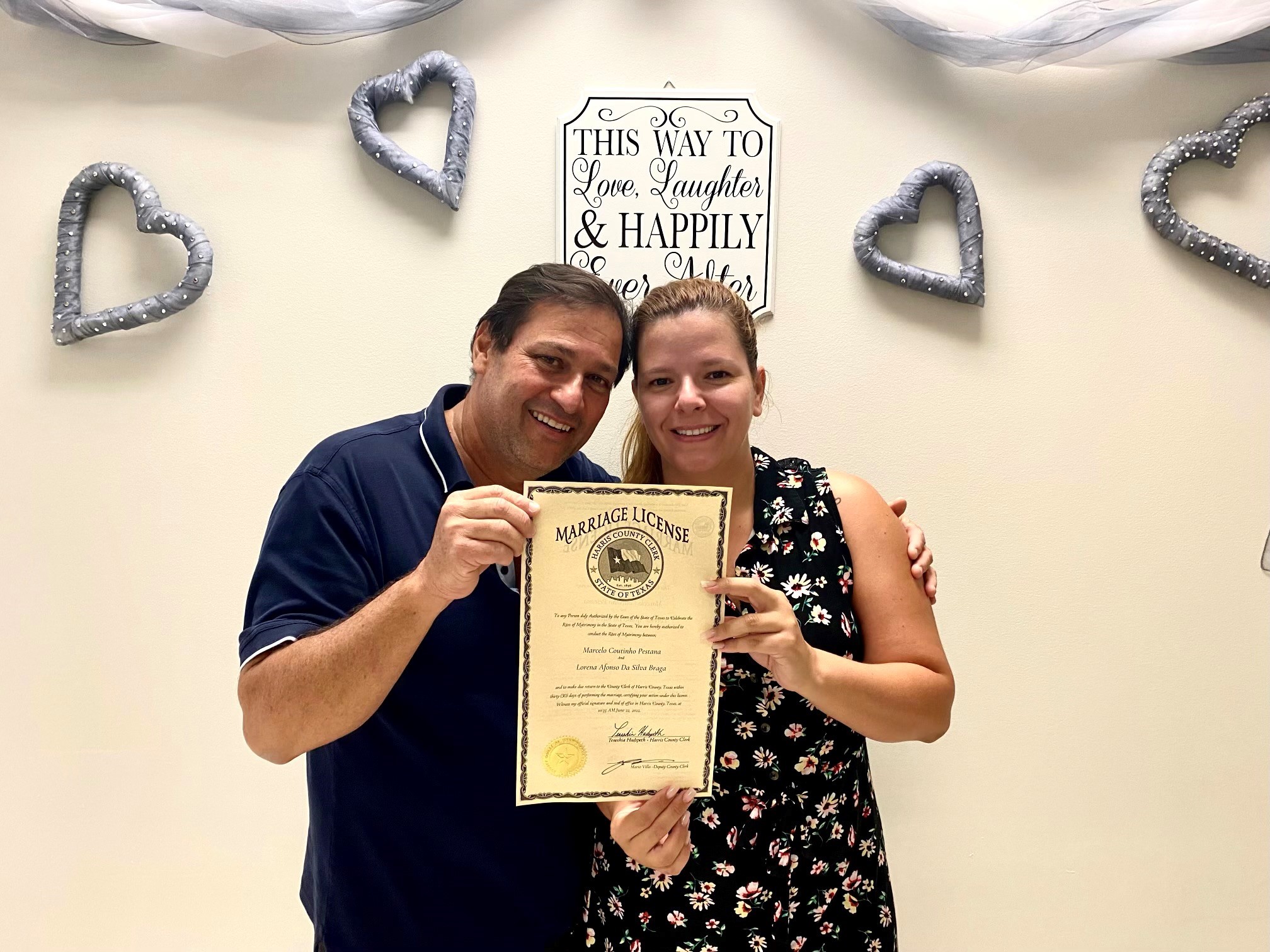
The primary custodian of Harris County marriage records is the Harris County Clerk’s Office, a constitutional officer elected to serve four-year terms. This office is tasked with issuing marriage licenses, recording marriages, and maintaining permanent archives. The Harris County Clerk oversees operations, while deputy clerks and records management staff handle daily processing, digitization, and public access requests.
Supporting roles include: - Harris County District Clerk: Manages court-ordered records, such as divorce decrees or annulments, which may intersect with marriage history. - Texas Department of State Health Services (DSHS): While not directly responsible for record-keeping, DSHS provides statewide oversight for vital statistics, including marriage records, under Texas Health and Safety Code § 191.002. - Harris County Appraisal District: Occasionally referenced for property-related records tied to marital status, though not a primary record-keeper.
The Harris County Clerk’s Office operates under Local Government Code § 201.001, which grants it authority to establish rules for record access, fees, and preservation. Digital initiatives, such as the Harris County Vital Statistics Online Portal, were introduced in 2015 to improve efficiency, though physical records remain available for in-person review.
Historical Context of Marriage Record-Keeping in Harris County
Marriage record-keeping in Harris County has evolved alongside Texas’s legal and technological advancements. Early records, dating back to 1837 (when Harris County was established), were manually maintained in ledgers before transitioning to printed forms in the late 19th century. Key milestones include:
- 1907: Texas enacted the Marriage License Law, standardizing requirements across counties and mandating record-keeping by county clerks. - 1965: The Texas Vital Statistics Act consolidated oversight under DSHS, though counties retained primary responsibility for issuance and storage. - 2005: Hurricane Katrina disrupted physical records, prompting the Harris County Clerk’s Office to accelerate digitization efforts, including the creation of backup archives. - 2015: Launch of the online marriage record portal, reducing processing times and enabling remote access for researchers and legal professionals.
Historical gaps exist for records predating 1885, particularly for marriages not registered with the county clerk. The Texas State Library and Archives Commission holds microfilm copies of early records, but digitization remains incomplete for some periods.
Comparison of Harris County Marriage Records with Other Major Texas Counties
Marriage record policies vary across Texas counties, influenced by population density, technological infrastructure, and local priorities. Below is a comparative analysis of Harris County with Dallas, Bexar, and Tarrant Counties, highlighting differences in record-keeping, access, and historical adaptations.
| County Name | Primary Record-Keeper | Key Access Policies | Notable Historical Changes |
|---|---|---|---|
| Harris County | Harris County Clerk’s Office (since 1837) |
|
|
| Dallas County | Dallas County Clerk’s Office (since 1846) |
|
|
| Bexar County | Bexar County Clerk’s Office (since 1835) |
|
|
| Tarrant County | Tarrant County Clerk’s Office (since 1849) |
|
|
Key Observations: - Harris County leads in digital accessibility and expedited processing, reflecting its high-volume demand. - Bexar County lags in digitization but compensates with robust historical preservation partnerships. - Dallas and Tarrant Counties balance online access with strict adherence to TPIA privacy protections. - Blockchain and RFID innovations are emerging in Bexar and Tarrant, signaling future trends in record security.
Types of Documents Included in Harris County Marriage Records
Harris County marriage records encompass a range of legal documents, each serving distinct purposes in civil, genealogical, and administrative contexts. The primary categories include:
- Marriage Licenses:
*"A marriage license is a legal authorization issued by the county clerk, permitting two individuals to marry. It must be obtained before a marriage ceremony and includes applicant details, fees, and expiration dates
How to Access Harris County Marriage Records: Step-by-Step Procedures and Methods
Obtaining marriage records in Harris County, Texas, involves multiple pathways tailored to convenience, urgency, or legal requirements. Whether accessing public records, restricted files, or certified copies, understanding the procedural nuances—such as documentation, fees, and operational constraints—ensures a seamless experience. This section outlines structured methods for in-person, online, and mail-based requests, alongside alternative routes for specialized needs, including expedited processing and legal interventions.
In-Person Requests at the Harris County Clerk’s Office
The Harris County Clerk’s office serves as the primary hub for retrieving marriage records physically located at 1001 Preston, Houston, TX 77002. Operating hours are Monday–Friday, 8:00 AM–5:00 PM, with extended hours during peak seasons (e.g., tax season or holidays). To access records in person, applicants must present government-issued photo identification (e.g., driver’s license, passport) and proof of relationship to the subject (e.g., birth certificate, court order, or notarized letter for authorized representatives like attorneys or next of kin). Required Documents for Public Records:
Valid ID (driver’s license, state ID, or passport). Proof of relationship (if requesting on behalf of another individual). Payment via cash, check, or card for applicable fees (see fee structure below). Fee Structure for In-Person Requests:
Certified copy: $15 per record (cash, credit/debit, or check payable to "Harris County Clerk"). Non-certified copy: $10 per record. Additional copies: $2 each (for same-day requests). Operational Notes:
Peak hours (9:00 AM–11:00 AM) experience longer wait times; early arrivals are recommended. Weekends and holidays require advance appointments via email (clerk@harriscountycourts.com) or phone (713-755-6220). Certified copies are issued on-site and include an official embossed seal, while non-certified copies are printed without the seal. Step-by-Step Online Requests via the Harris County Clerk’s Portal
The Harris County Clerk’s official portal (https://www.harriscountytexas.gov/) streamlines access to marriage records digitally. Below is a checklist with screenshot descriptions for navigating the system: 1. Access the Vital Records Portal:
Navigate to the Harris County Clerk’s website. Locate the "Vital Records" tab in the main menu (typically under "Departments" or "Services"). Screenshot Description: The tab appears as a dropdown menu with options for Birth, Marriage, Death, and Divorce records. 2. Select Marriage Records:
Click "Marriage" from the dropdown menu. Screenshot Description: This redirects to a search page with fields for first name, last name, and date range (e.g., year of marriage). 3. Enter Search Criteria:
Input the full name of the individual(s) and approximate marriage date (month/year suffices for initial searches). Note: For accuracy, use the exact spelling of names as recorded in the original license. 4. Review and Pay for Records:
If the record is found, a summary page displays key details (e.g., license number, date, officiant). Select "Request Certified Copy" or "Non-Certified Copy" and proceed to checkout. Screenshot Description: The payment page accepts credit/debit cards and lists fees ($15 for certified, $10 for non-certified). 5. Delivery Options:
Choose between email delivery (non-certified copies) or mail delivery (certified copies via USPS, typically 7–10 business days). Important: Certified copies mailed to third parties require notarized authorization from the record subject. Technical Tips:
Use Chrome or Firefox for optimal compatibility. Clear browser cache if searches fail to populate results. Save search parameters as a PDF for future reference under "My Account" (requires login). Public vs. Restricted Marriage Records: Legal Access Procedures
Harris County marriage records are generally public, but exceptions apply to sealed or confidential marriages (e.g., those filed under Texas Family Code § 2.103 for privacy protections). Below is a comparison of access methods:
Record Type Access Method Legal Requirements Processing Time Public Records In-person, online, or mail None (open to the public after 72 hours of filing). Immediate (in-person), 7–10 days (mail). Restricted/Sealed Court Order or FOIA Request Petition for Access filed with the Harris County District Clerk (Form M-560). 14–30 days (court review). Confidential Direct Request from Subject Notarized authorization from the individual named on the record. 3–5 business days. Steps for Restricted Records: 1. File a Petition: Submit Form M-560 (available here) to the Harris County District Clerk with a $100 filing fee. 2. Court Review: A judge evaluates the request based on public interest vs. privacy rights (Texas Public Information Act exemptions apply). 3. Appeal Process: Denials can be appealed to the Texas Attorney General’s Office under FOIA guidelines. Key Legal Notes:
Sealed records may only be accessed by authorized parties (e.g., attorneys, law enforcement with a subpoena). Confidential marriages (e.g., celebrity weddings) require direct consent from the bride/groom or their legal representatives. Ordering Certified Copies by Mail: Forms, Fees, and Processing
Mail requests for certified marriage records require Form VC-11 (Vital Statistics Request for Certified Copy), available via:
Download: Harris County Clerk’s Forms Page. Mail: Request by emailing clerk@harriscountycourts.com with a subject line "VC-11 Request" for a physical copy. Required Information on Form VC-11:
Full name(s) of the parties. Approximate marriage date (month/year). Purpose of the copy (e.g., legal proceedings, genealogical research). Delivery address (must match ID for certified copies). Payment method (check or money order payable to "Harris County Clerk"). Mailing Address: Harris County Clerk Vital Statistics Unit 1001 Preston, Houston, TX 77002 Processing Times:
Standard: 10–14 business days. Expedited (additional $25 fee): 3–5 business days (holidays excluded). Rush (24-hour, $50 fee): Available for legal emergencies (requires notarized justification). Payment and Tracking:
Include a self-addressed stamped envelope for return. Use USPS Certified Mail for tracking ($5.50 additional fee). No refunds issued for incorrect or incomplete requests. Alternative Methods to Access Harris County Marriage Records
Beyond official channels, third-party vendors, genealogical societies, and legal avenues provide supplementary routes. Below is a comparative table of alternative methods:
Method Pros Cons Third-Party Vendors Fast delivery (24–48 hours), 24/7 access, digital copies (e.g., Ancestry.com, VitalChek). Higher fees ($30–$50 per record), potential for outdated data, privacy risks. Genealogical Societies Free/low-cost for members (e.g., Houston Pioneer Research Center), expert assistance. Limited to public records; may require membership fees ($20–$50/year). FOIA Request Access to sealed records if justified under public interest (e.g., journalism, academic research). Lengthy process (30+ days), potential legal costs, redactions common. County Types of Marriage Records in Harris County and Their Uses
Harris County marriage records serve as critical historical, legal, and genealogical documents, each type offering distinct value depending on the purpose—whether for family research, legal proceedings, or administrative verification. Original licenses, certified copies, and archival microfilms represent the primary categories, each containing unique details and fulfilling specific roles. Understanding their differences and applications allows individuals to leverage these records effectively for research, legal validation, or personal documentation. This section explores the categorization of Harris County marriage records, their interpretation, and practical uses across genealogical, legal, and administrative domains.
Categorization of Marriage Records and Their Specific Applications
Harris County maintains multiple formats of marriage records, each tailored to different needs. Original marriage licenses are the initial applications filed by couples, typically containing handwritten or typed details such as names, ages, residences, and signatures of applicants, witnesses, and the officiant. These records are often used for genealogical research due to their raw, unaltered data, but they lack the legal weight of certified copies. Certified copies, issued by the Harris County Clerk’s office, are official duplicates bearing a raised seal or stamp, validating the authenticity of the marriage. These are essential for legal proofs, including immigration petitions (e.g., spousal visas), inheritance claims, and court proceedings where marital status must be verified. Microfilm archives, digitized in recent years, preserve historical records dating back to the 19th century. These are invaluable for long-term family history research, particularly for ancestors married before computerized systems were in place. A table summarizing the uses of each record type follows:
Record Type Primary Use Cases Key Features Original Marriage License
- Genealogical research (ancestral lineage)
- Verification of early marriages (pre-1900s)
- Cross-referencing with census or probate records
- Handwritten or typed
- No official seal (uncertified)
- May include marginal notes or corrections
Certified Copy
- Legal proceedings (divorce, inheritance)
- Immigration documentation (I-130 petitions)
- Name change verification (e.g., Social Security)
- Bears Harris County seal
- Notarized by the Clerk’s office
- Standardized format for court admissibility
Microfilm/Digital Archive
- Historical research (pre-1980s marriages)
- Preservation of degraded originals
- Access to records lost in disasters
- Digitized images of original licenses
- Searchable via FamilySearch or county databases
- May include indexing errors in older entries
Interpreting Key Details in Harris County Marriage Records
Marriage records contain standardized and variable elements, each conveying specific information. Signatures—of the bride, groom, witnesses, and the officiant—authenticate the marriage’s validity. For example, a missing witness signature might indicate a clerical error or an informal ceremony later legalized. Dates are critical: the license issuance date (when the application was filed) and the marriage date (when the ceremony occurred) can differ by days or weeks, particularly if couples delayed their wedding. Notary stamps or judicial seals confirm the officiant’s authority. In Harris County, records often include the name of the justice of the peace or religious leader who performed the ceremony, which can be cross-referenced with church archives or probate records for further verification. Residence details (e.g., "Houston, Harris County, Texas") help trace family migrations, while ages (sometimes listed as "21+" or exact birth years) assist in estimating birthdates for genealogical research. Example of a record breakdown:
Bride’s Signature: Confirms her consent and legal name at the time of marriage. Witness Signatures: Often include names and addresses; useful for locating relatives in census records. Officiant’s Seal: Validates the ceremony’s legality (e.g., a notary public or rabbi’s stamp). Marginal Notes: Later additions (e.g., "Divorced 1952") provide additional life-event context. Utilizing Marriage Records for Family History Research
Marriage records are foundational for genealogical reconstruction, especially when cross-referenced with other documents. For instance, a Harris County marriage record for John Smith (1895) might list his age as "30," suggesting a birth year of 1865. This can be verified against the 1870 census or his father’s probate records. Similarly, a bride’s maiden name in a marriage record can guide searches for her birth certificate or parents’ marriage license. Strategies for cross-referencing:
Census Records: Compare ages listed in the marriage record with census entries for consistency. Death Certificates: A spouse’s death certificate may cite the marriage record as a source, confirming the union. Probate Files: Widows or widowers often appear in estate records, linking back to marriage dates. Church Archives: Religious marriages may be documented separately, providing additional context. Example Workflow: 1. Locate a 1920 Harris County marriage record for Emma Johnson. 2. Note her age ("24") and her parents’ names ("William Johnson, Mary Johnson"). 3. Search the 1900 census for William and Mary Johnson to identify Emma’s birth year (~1896). 4. Use Emma’s maiden name to find her children’s birth certificates, which may list her as "Emma Smith (née Johnson)."
Legal Applications of Marriage Records in Harris County
Certified marriage records are admissible in Texas courts and federal agencies, serving as proof of marital status for critical transactions. Common legal uses include:
Inheritance Claims: A spouse’s name on a marriage certificate may determine eligibility for an estate under Texas Probate Code § 53. Social Security Benefits: Widows or widowers must present a certified copy to claim survivor benefits (SSA-10 form). Name Changes: A marriage certificate is required to update driver’s licenses or passports under Texas Family Code § 6.201. Immigration Petitions: U.S. citizens sponsoring spouses for green cards (Form I-130) must submit certified copies to USCIS. Court Cases Requiring Marriage Records:
Divorce Proceedings: Original licenses may be subpoenaed to verify marriage duration for alimony calculations. Paternity Disputes: If a marriage record contradicts DNA evidence, it may be challenged in Harris County Probate Court. Adoption Cases: Stepparent adoptions often require proof of the biological parent’s marriage to the adopting spouse. Real-Case Scenario: Resolving an Inheritance Dispute with Marriage Records
In 2018, the estate of Harold Thompson, a Houston resident, faced a contested inheritance claim by his nephew, James Thompson. The nephew argued that Harold had been previously married to his aunt, Martha Thompson, and that their marriage entitled him to a share of the estate under Texas’s community property laws. However, Harold’s will named his second wife, Eleanor Thompson, as the sole beneficiary. During probate proceedings in Harris County Probate Court, Eleanor’s legal team obtained a certified copy of Harold and Martha’s marriage license from the Harris County Clerk’s office, dated 1955. The record revealed that the couple had divorced in 1962, as evidenced by a decree of divorce filed in the same county. Additionally, Harold and Eleanor’s
Digital and Physical Archives: Comprehensive Guide to Accessing Harris County Marriage Records
Harris County marriage records span over a century, preserved in both digital and physical formats across multiple repositories. These archives serve as critical resources for genealogists, legal professionals, and individuals tracing family history. Understanding the locations, search methods, and limitations of each repository ensures efficient retrieval of records. Below is a structured breakdown of where to find Harris County marriage records, including physical archives, digital databases, and external repositories, along with practical guidance for preservation.
Physical Locations of Harris County Marriage Records
Harris County marriage records are stored in designated offices and historical archives, each serving distinct time periods and accessibility needs. The Harris County Clerk’s Office maintains the most recent records, while older documents are archived in specialized repositories such as the Houston Metropolitan Research Center (HMRC) and the Texas State Library and Archives Commission (TSLAC). Below are the primary physical locations:
- Harris County Clerk’s Office – Main Branch
Address: 1001 Preston St, Houston, TX 77002 Coverage: Records from 1837 to present (with digitized records available online for recent years). Access: In-person requests during business hours (Monday–Friday, 8:00 AM–5:00 PM). Certified copies may require additional fees. Note: The main branch handles marriage licenses, certificates, and historical records up to 1900.- Harris County Clerk’s Office – Satellite Branches
Locations:Coverage: Primarily assists with digital record searches but may direct requests to the main branch for physical copies. Access: Appointments recommended for large requests; walk-ins accepted for single records.
- Houston Central Library (Downtown): 500 McKinney St, Houston, TX 77002 (limited marriage record access; primarily for research assistance).
- Cypress Creek Municipal Library: 9700 Gulf Freeway, Houston, TX 77036 (satellite office for record requests).
- Katy Prairie Branch Library: 4350 S Fry Rd, Katy, TX 77494 (serves western Harris County residents).
- Houston Metropolitan Research Center (HMRC)
Address: 712 McKinney St, Houston, TX 77002 (within the Houston Public Library system). Coverage: Microfilm and digitized records from 1837–1900, including early marriage bonds, licenses, and certificates. Access: Free public access; staff assistance available for navigating microfilm readers. Appointments encouraged for extensive research. Unique Features:
- Original handwritten records from the 19th century.
- Expert genealogists on-site for complex searches.
- Photocopy services available (fees apply).
- Texas State Archives (TSA) – Austin
Address: 312 E 11th St, Austin, TX 78701. Coverage: 1901–1970s records transferred from Harris County Clerk’s Office. Later records may be incomplete due to digitization gaps. Access: In-person or via mail request (requires TSLAC Form 500). Digital scans available for some records through the Texas Archives Online portal. Note: Prioritizes preservation over immediate access; processing times may vary.- National Archives at Fort Worth (Partial Coverage)
Address: 300 E John Carpenter Fwy, Fort Worth, TX 76185. Coverage: Federal district court records (e.g., annulments, divorces) may indirectly reference Harris County marriages. Not a primary source for standard marriage certificates. Access: Appointment required; research services available for a fee.Navigating the Harris County Clerk’s Digital Archive
The Harris County Clerk’s Digital Archive provides online access to marriage records from 1970 to the present, with select older records (1900–1969) available in digitized form. Below is a step-by-step guide to searching, troubleshooting, and optimizing results:
- Accessing the Digital Portal
The primary portal is the Harris County Clerk’s Public Access Portal:Note: Some records may redirect to Ancestry.com or Fold3 for paid access.
- URL: https://www.harriscountycourts.com (navigate to "Records" > "Marriage Records").
- Alternative: FamilySearch.org (free access to indexed records, but requires account creation).
- Searching by Criteria
The portal supports searches by:Pro Tip: For pre-1970 records, use the HMRC microfilm index as a fallback if digital results are incomplete.
- Name: Full name of bride/groom (wildcard searches allowed for variations).
- Date: Year or exact date of marriage (critical for accuracy; earlier records may lack precise dates).
- Record Type: License, certificate, or bond (select based on the document needed).
- Location: Precinct or county (e.g., "Harris County, TX").
- Troubleshooting Common Issues
- Paywall Errors:
- Use free alternatives like FamilySearch or contact the Clerk’s Office for a $10–$20 fee waiver for indigent researchers.
- Library cards (e.g., Houston Public Library) may grant access to paid databases like Ancestry.
- Outdated Databases:
- Records from 2010–2015 may have delays; verify with the Clerk’s Office via phone (713-755-6123).
- For missing records, file a Texas Public Information Act (TPIA) request (see below).
- Search Failures:
- Check for spelling variations (e.g., "Smith" vs. "Smyth").
- Search by approximate date (e.g., "January 1950" instead of exact day).
- Use wildcards (e.g., "Jon*" for "Johnson," "Jones").
- Downloading and Saving Records
- Digital records are typically available as PDFs (certified copies may require in-person pickup).
- Save files with a naming convention (e.g., "HarrisCounty_Marriage_1985_Smith.pdf").
- For high-resolution scans, use the HMRC microfilm reader (requires on-site visit).
Comparison: Digital vs. Physical Archives
The choice between digital and physical archives depends on the record’s age, urgency, and accessibility needs. Below is a comparative analysis:
Feature Digital Archives Physical Archives Coverage Period
- 1970–present (fully digitized).
- 1900–1969 (
Common Challenges and Solutions for Obtaining Harris County Marriage Records
Accessing Harris County marriage records can present unique hurdles, ranging from missing or damaged documentation to discrepancies in personal details such as names or dates. These challenges often arise due to administrative gaps, historical record preservation issues, or ambiguities in identifying information. Understanding how to navigate these obstacles—whether through direct interventions, legal recourse, or professional assistance—ensures a more efficient and successful retrieval process. Solutions typically involve systematic inquiries, verification protocols, and, in some cases, escalation to regulatory bodies or legal experts to resolve disputes.Frequent Obstacles and Corresponding Solutions
Obtaining Harris County marriage records may encounter several recurring challenges, each requiring a tailored approach. Below are common issues and their respective solutions, emphasizing proactive measures to mitigate delays or denials.
- Missing or Damaged Records Records may be lost due to natural disasters, administrative errors, or historical gaps in digitization. Harris County Clerk’s office maintains backups but may still face limitations in retrieving records from before 1970. If a record is confirmed missing, request a formal inquiry through the Clerk’s office, specifying the marriage date, names, and any additional identifiers (e.g., license number). For pre-1970 records, consult the Harris County Archives or the Texas State Library and Archives Commission, which may hold microfilm or digitized copies.
- Name Changes or Variations Records may list names inconsistently due to spelling errors, nicknames, or legal name changes post-marriage. To resolve this, cross-reference records using alternative identifiers such as social security numbers (if available), parents’ names, or approximate marriage dates. Submit a request with all possible variations of the name to the Clerk’s office, and specify that you are searching for a marriage under multiple name formats.
- Incorrect or Ambiguous Dates Discrepancies in recorded dates (e.g., day/month confusion or year errors) can complicate searches. Provide a range of possible dates (e.g., "January–March 1985") and any contextual clues (e.g., witnesses’ names, ceremony location) to improve accuracy. If the record is found but the date is disputed, request a certified copy with metadata or consult the original marriage license application for verification.
- Multiple Marriages Under the Same Name Individuals may have multiple marriages recorded under identical or similar names, particularly if they remarried. To distinguish between records, use additional details such as ages at marriage, residency addresses, or previous spouse names. If ambiguity persists, request a detailed index search from the Clerk’s office or hire a genealogist to analyze patterns in marriage licenses.
Step-by-Step Process for Missing or Damaged Records
When a marriage record is confirmed missing or damaged, follow this structured approach to maximize retrieval chances. The flowchart below outlines the procedural steps, from initial inquiry to potential appeals.
- Initial Verification Confirm the record’s existence by searching the Harris County Vital Statistics Index or contacting the Clerk’s office via phone (713-755-6123) or email (vitalstatistics@harriscountytexas.gov). Provide exact details: full names, approximate marriage date, and location (e.g., courthouse where licensed).
- Formal Written Inquiry Submit a written request to the Harris County Clerk’s office, citing the missing record and requesting an investigation. Include:
Example email template:
- Your name and contact information.
- Marriage details (names, date, location).
- A statement explaining the importance of the record (e.g., inheritance, genealogical research).
- Any prior attempts to retrieve the record.
Subject: Formal Inquiry Regarding Missing Marriage Record Dear Vital Statistics Department, I am writing to formally request an investigation into the missing marriage record for [Full Name 1] and [Full Name 2], allegedly married on [Date] in Harris County. I have previously searched your online index without success and would appreciate your assistance in locating this record. Please advise if additional documentation or fees are required. Sincerely, [Your Full Name] [Your Contact Information]- Escalation to Supervisory Staff If the initial response is unsatisfactory, escalate your request to the Clerk’s office supervisor or the Harris County Administration office. Reference your prior correspondence and request a timeline for resolution. Politely emphasize compliance with Texas Public Information Act (TPIA) requirements for record accessibility.
- Appeal for Denied Requests Should the Clerk’s office deny access, submit a formal appeal within 30 days, citing TPIA (Chapter 552 of the Texas Government Code). Include:
Example appeal letter:
- A summary of the denial and reasons provided.
- Documentation of prior correspondence.
- A request for reconsideration or alternative record sources (e.g., microfilm).
[Your Name] [Your Address] [City, State, ZIP] [Email] | [Phone] [Date] Harris County Clerk’s Office 1001 Preston Street, Suite 410 Houston, TX 77002 Subject: Appeal of Denied Marriage Record Request Dear [Clerk’s Name or "To Whom It May Concern"], I am appealing the denial of my request for the marriage record of [Names] on [Date]. As per Texas Government Code §552.301, I believe this record qualifies as public information and should be made available. I have attached copies of prior correspondence and request a review of this decision. Please advise on next steps or alternative methods to access this record. Sincerely, [Your Name]- Legal Remedies If the appeal fails, pursue legal avenues:
- File a complaint with the Texas Attorney General’s Office, citing violations of TPIA.
- Consult an attorney to file a lawsuit for mandamus relief, compelling the Clerk’s office to disclose the record under public interest exceptions.
- For federal cases (e.g., FOIA), involve the National Archives if the record predates county jurisdiction.
Handling Ambiguous or Conflicting Information
Records with conflicting details—such as multiple marriages under the same name or discrepancies in ages—require meticulous verification to ensure authenticity. Below are strategies to resolve such ambiguities, including the role of third-party experts.
- Cross-Referencing with Supporting Documents Validate ambiguous records by comparing them with supplementary sources:
Request certified copies of these documents from the Harris County Clerk’s office or relevant agencies (e.g., Texas Department of State Health Services for vital records).
- Divorce decrees or death certificates linked to the marriage.
- Witness statements or affidavits from the ceremony.
- Newspaper announcements or church records (if applicable).
- Census data or military service records for age verification.
- Professional Genealogical or Legal Review For complex cases, engage a professional genealogist or attorney specializing in vital records. Their expertise includes:
Cost and Timeline Considerations:
- Analyzing patterns in marriage licenses (e.g., clerk signatures, notary seals).
- Tracking name changes through court records (Harris County District Clerk).
- Assessing the plausibility of conflicting dates (e.g., age at marriage laws in Texas).
Service Estimated Cost Timeline Genealogist Consultation (1–2 hours) $150–$300 1–4 weeks Legal Review (Record Authentication) $200–$500+ 2–6 weeks Court Pet Tools and Resources for Researching Harris County Marriage Records
Accessing Harris County marriage records efficiently requires leveraging a combination of digital tools, subscription-based databases, and lesser-known archives. Researchers can enhance their investigations by utilizing specialized platforms designed for genealogy, local historical repositories, and alternative records that provide contextual depth. These resources not only streamline the search process but also offer insights into broader historical and familial narratives. Below are curated tools, advanced search techniques, and organizational strategies to maximize research productivity while adhering to ethical standards.Essential Tools for Researching Marriage Records
Genealogical research in Harris County benefits from both paid and free resources, each offering unique advantages depending on the scope and specificity of the inquiry. Paid databases often provide deeper archives and enhanced search functionalities, while free resources are invaluable for verifying findings or accessing records outside commercial repositories. Below are categorized tools for effective research: Paid Databases- Ancestry.com: Offers extensive digitized collections of U.S. marriage records, including Harris County indices and images. Subscription-based but includes features like family tree building and collaborative tools.
- FamilySearch: While many records are free, premium access unlocks additional features such as advanced hints and record details. Partnerships with local archives ensure comprehensive coverage.
- Findmypast: Specializes in international and U.S. records, including Texas-specific collections. Ideal for researchers with ties to multiple regions.
- MyHeritage: Combines DNA matching with historical records, offering unique clustering tools to connect related families in Harris County.
Free Resources- FamilySearch.org: Hosts free digital collections of Harris County marriage records, including indexed and browsable images. Requires account creation but offers no-cost access to billions of records.
- Texas State Library and Archives Commission (TSLAC): Provides free access to digitized county records, including marriage licenses and certificates, via their online portal.
- Houston Public Library (HPL) Digital Collections: Features free access to historical newspapers, city directories, and genealogy resources relevant to Harris County.
- Local County Clerk Offices: Physical and digital records are often available for free or at minimal cost. Harris County Clerk’s office maintains in-person and online access to marriage records post-1970.
Specialized Tools- Google Books: Searchable digitized books, including family histories and local publications that may reference Harris County marriages.
- Internet Archive: Provides free access to historical books, periodicals, and government documents that could contain indirect references to marriages.
- NewspaperArchives.com (Paid): Offers access to obituaries, engagement announcements, and marriage notices in Houston Chronicle and other local papers.
Comparison of Popular Genealogy Websites for Harris County Records
Selecting the right platform depends on the depth of records, search flexibility, and budget constraints. Below is a comparative table outlining key features, record quality, and subscription details for leading genealogy websites:Note: Always verify record accuracy by cross-referencing with multiple sources, especially for paid databases where transcription errors may occur.
Website Key Features Cost and Subscription Details Ancestry.com
- Comprehensive U.S. marriage record collection, including Harris County indices (pre-1970) and digitized images.
- Advanced search filters (name, date, location, spouse details) and wildcard functionality.
- Family tree builder with collaborative editing and source citation tools.
- Integration with other Ancestry tools like ThruLines for DNA-based family connections.
- Subscription: $24.99/month or $199/year (U.S. access).
- Free trial available (14 days with credit card required).
- Library editions available for free with a valid library card.
FamilySearch
- Free access to digitized Harris County marriage records (1837–1965) via indexed and browsable collections.
- Premium features include advanced record hints and detailed metadata.
- Collaborative family tree tools and access to global genealogical resources.
- Partnerships with local archives ensure continuous updates.
- Free for basic access; premium upgrades available for $9.95/month or $79/year.
- Free access in FamilySearch Centers (affiliated libraries and archives).
Findmypast
- Specialized Texas marriage collections, including county-specific records and probate files.
- Search filters for exact/approximate names, date ranges, and record types.
- Integration with UK and Irish records for researchers with international ties.
- Transcription tools for deciphering handwritten records.
- Subscription: $29.95/month or $199.95/year.
- Free 14-day trial available.
- Discounts for students, seniors, and military personnel.
MyHeritage
- Comprehensive U.S. marriage records with DNA matching for genetic genealogy.
- Unique "Record Matches" feature highlights relevant records across databases.
- Smart matching technology connects records to family trees automatically.
- Includes historical maps and timelines for contextualizing marriages.
- Subscription: $21.99/month or $199.95/year (Basic with DNA); $79.99/month for Full Access.
- Free trial available (limited access).
- Free access to basic records without subscription.
Advanced Search Techniques in Digital Archives
Digital archives offer powerful search functionalities that can significantly narrow down results for Harris County marriage records. Mastering these techniques reduces time spent sifting through irrelevant data and improves the precision of findings. Key strategies include: Wildcard Searches Wildcards (e.g., *, ?, #) replace unknown characters in names or dates. For example:- Searching `Joh?n Smith` retrieves records for "John," "Jon," or "Joan" Smith.
- Useful for surnames with variant spellings (e.g., `McDonald` vs. `MacDonald`).
Date Ranges Limiting searches to specific timeframes (e.g., 1920–1940) refines results when exact dates are unknown. Many platforms allow ranges like:- `Before 1930`
- `Between Jan 1945 and Dec 1950`
Keyword Filters Combine terms to isolate relevant records:- `"Harris County" AND "marriage" AND "license"` (exact phrase searches).
- Exclude unrelated terms using `-` (e.g., `Texas -Dallas` to avoid Dallas County records).
Boolean Operators Advanced platforms support:- `AND` (both terms must appear).
- `OR` (either term suffices).
- `NOT` (excludes a term).
Example Search Query on Ancestry.com: > `Surname: "Johnson" AND Location: "Harris County" AND Event: "Marriage" AND Year: 1910–1930 NOT "Dallas"` Pro Tip: Use the "Browse Images" feature in FamilySearch or Ancestry to navigate records alphabetically or by date when indexed searches yield insufficient results.Templates for Organizing Research Findings
Systematic organization is critical for managing large volumes of marriage records, especially when tracing multiple generations or cross-referencing sources. Below are practical templates to structure research findings: Spreadsheet for Tracking Record Sources Create a spreadsheet with columns for:- Record Type (e.g., marriage license, certificate, newspaper clipping).
- Source (e.g., Ancestry.com, Harris County Clerk, Houston Chronicle).
- URL/Location (digital
Harris County marriage records are more than bureaucratic documents—they are threads connecting generations, resolving legal disputes, and preserving legacies. By mastering the tools, policies, and historical nuances outlined here, researchers and legal professionals can navigate the archives with confidence. Whether you’re uncovering a great-grandparent’s marriage certificate or verifying a spouse’s status for a court case, the key lies in persistence, precision, and leveraging the right resources. From the Harris County Clerk’s digital portal to hidden repositories like church archives, every record holds potential answers. Start your search today, and let these documents illuminate the past while securing your future.
Leave a Comment
Comments are moderated before appearing. The data you submit is processed according to the Privacy Policy of Work Cloud.