Choosing the Best Linux Distros for Beginners in 2024: A Strategic Guide
Table of Contents
- The Complete Overview of Best Linux Distros for Beginners
- Historical Background and Evolution
- Core Mechanisms: How It Works
- Key Benefits and Crucial Impact
- Major Advantages
- Comparative Analysis
- Future Trends and Innovations
- Conclusion
- Comprehensive FAQs
- Q: Can I run Windows or macOS apps on beginner Linux distros?
- Q: Which distro is best for very old hardware (e.g., 5-year-old laptops)?
- Q: Do beginner Linux distros support gaming?
- Q: How often should I update my beginner Linux distro?
- Q: What if my Wi-Fi or graphics card doesn’t work out of the box?
- Q: Is it safe to use Linux for daily tasks like banking or work?
The Linux ecosystem thrives on diversity, offering hundreds of distributions tailored to every need—yet for those new to open-source systems, the sheer variety can feel like navigating a maze without a map. Unlike proprietary alternatives, best Linux distros for beginners prioritize accessibility, documentation, and hardware compatibility, but not all deliver equally. The wrong choice can lead to frustration: outdated package managers, cryptic terminal commands, or unresolved driver issues that leave users questioning why they abandoned Windows or macOS in the first place.
What separates the truly beginner-friendly Linux distros for newcomers from those designed for power users? It’s not just the desktop environment or preinstalled software—it’s the balance between simplicity and flexibility. A distribution might boast a polished interface but fail to offer essential tools like a graphical package manager or hardware detection out of the box. Conversely, some minimalist distros demand manual configuration, which can deter those who expect plug-and-play functionality. The goal isn’t to oversimplify Linux to the point of ineffectiveness, but to curate options that respect the user’s time while still empowering them to explore deeper.
Linux’s philosophy—“do it yourself” versus “just works”—creates a paradox for beginners. The best beginner Linux distros must bridge this gap, offering intuitive workflows without sacrificing the underlying power that makes Linux a developer’s and sysadmin’s dream. This guide cuts through the noise, evaluating distros based on real-world usability, community support, and long-term viability—so you can make an informed decision without wasting weeks troubleshooting.

The Complete Overview of Best Linux Distros for Beginners
The term "best Linux distros for beginners" is deliberately vague because no single distribution serves every user equally. A graphic designer’s needs differ from those of a student or a retired professional seeking a lightweight system. However, all beginner-friendly Linux distros share core principles: they minimize setup complexity, provide clear documentation, and integrate seamlessly with common hardware. The most successful options—like Ubuntu’s derivatives or Linux Mint—achieve this by leveraging decades of community refinement, ensuring that even non-technical users can migrate from Windows or macOS with minimal friction.What sets these distros apart is their approach to user experience (UX). For instance, some prioritize a Windows-like interface to ease the transition, while others focus on performance optimization or educational resources. The choice often hinges on three factors: hardware compatibility, software availability, and learning curve. A distro with perfect out-of-the-box support for NVIDIA GPUs or Wi-Fi chips might be ideal for one user but irrelevant to another running older hardware. Similarly, a distro with a steep learning curve—like Arch Linux—can be rewarding for those willing to invest time, but it’s not practical for someone who just wants to browse the web and edit documents.
Historical Background and Evolution
The concept of beginner Linux distros emerged in the early 2000s as the open-source community recognized a gap: Linux was powerful but intimidating for non-experts. Projects like Ubuntu (2004) and Linux Mint (2006) democratized access by bundling user-friendly tools, polished interfaces, and extensive documentation. Ubuntu, in particular, became a gateway drug for millions, thanks to its “install and forget” philosophy—an approach that prioritized stability over cutting-edge features. Meanwhile, Fedora and openSUSE catered to those who wanted bleeding-edge software but still required a gentler slope than Arch or Gentoo.The evolution of best Linux distros for beginners reflects broader trends in computing. As cloud services reduced the need for local software installation, distros like Pop!_OS (by System76) emerged, blending performance tuning with beginner accessibility. Meanwhile, Debian, though technically advanced, spawned MX Linux—a lightweight, no-nonsense option for older hardware. The key insight? The “best” distro isn’t static; it adapts to changing user needs, from touchscreen support in Ubuntu Touch to privacy-focused alternatives like Tails or Qubes OS for security-conscious beginners.
Core Mechanisms: How It Works
At their core, beginner Linux distros rely on three technical pillars: package management, desktop environments, and hardware abstraction. Package managers (e.g., APT in Debian-based systems, DNF in Fedora) automate software installation, updates, and dependencies—critical for users who lack command-line proficiency. Desktop environments like GNOME, KDE Plasma, or Xfce dictate the user interface’s responsiveness and customization options, with some (like Cinnamon) designed to mimic Windows’ familiarity.Hardware abstraction is where many beginners stumble. A distro’s ability to detect and configure drivers for GPUs, Wi-Fi, or printers out of the box separates the usable from the unusable. For example, Linux Mint’s “Driver Manager” simplifies NVIDIA GPU setup, while Ubuntu’s “Additional Drivers” tool handles proprietary firmware automatically. Under the hood, these features rely on init systems (Systemd vs. OpenRC) and kernel modules, but users rarely interact with them directly—unless something breaks.
Key Benefits and Crucial Impact
The advantages of beginner Linux distros extend beyond technical ease. For starters, they eliminate licensing costs, a significant draw for students, freelancers, or budget-conscious users. Unlike Windows, which requires activation keys and forced updates, Linux distributions offer long-term stability—many versions (like Debian Stable) receive updates for years without major breaking changes. Additionally, the open-source model fosters transparency and customization: users can tweak everything from the kernel to the desktop theme without vendor restrictions.More subtly, best Linux distros for beginners cultivate digital literacy. Navigating a Linux system—even a user-friendly one—teaches fundamental computing concepts like file permissions, system monitoring, and terminal basics. This knowledge becomes invaluable for advanced tasks, such as server administration or scripting. As one Linux Foundation survey noted:
“Linux isn’t just an operating system; it’s an educational tool that demystifies how computers work at a systemic level.”
Major Advantages
- Hardware Compatibility: Most beginner Linux distros support a wide range of laptops, desktops, and even some ARM devices (e.g., Raspberry Pi). Tools like Ubuntu’s “Ubiquity Installer” automate driver detection for common peripherals.
- Software Ecosystem: Platforms like Flatpak and Snap ensure access to proprietary apps (e.g., Spotify, Steam) without manual compilation. Distros like Pop!_OS even preinstall gaming tools.
- Security and Privacy: Linux’s permission model reduces malware risks, and distros like Tails or Whonix offer anonymity features built-in. No forced telemetry or bloatware.
- Community Support: Forums (e.g., Ask Ubuntu, Linux Mint Forums) and IRC channels provide real-time help, often faster than corporate tech support.
- Future-Proofing: Skills learned on Linux transfer to servers, embedded systems, and even macOS (which is Unix-based). Many tech jobs now require Linux proficiency.
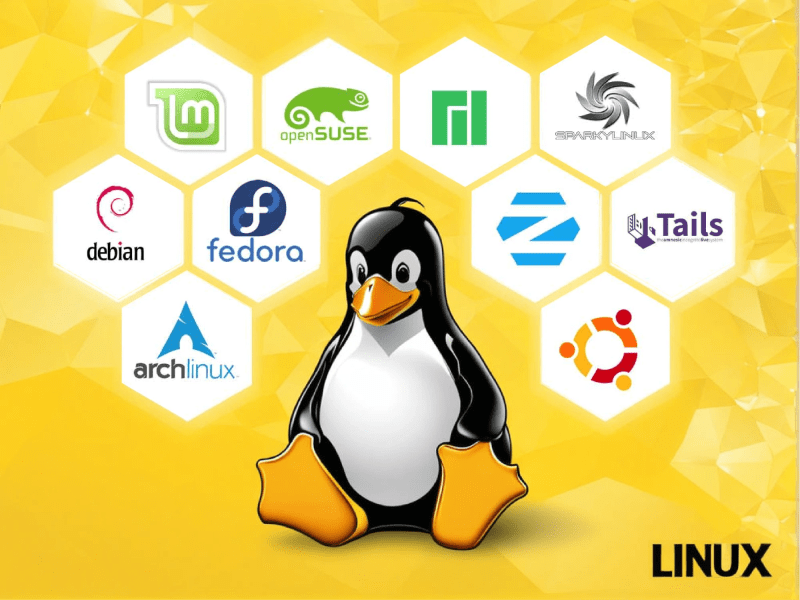
Comparative Analysis
| Distro | Key Strengths | Potential Drawbacks ||---------------------|---------------------------------------------------------------------------------|--------------------------------------------------|
| Ubuntu | Massive community, Snap support, LTS versions for stability. | GNOME can feel bloated; proprietary driver issues. |
| Linux Mint | Windows-like Cinnamon DE, lightweight, great for older hardware. | Slower updates than Ubuntu; fewer cutting-edge apps. |
| Fedora | Cutting-edge software, strong RPM package management, GNOME integration. | Shorter support cycles; not ideal for very old hardware. |
| Pop!_OS | Optimized for gaming/creative work, COSMIC desktop, great hardware detection. | Less polished than Ubuntu for absolute beginners. |
| MX Linux | Ultra-lightweight, Debian-based, excellent for netbooks/older PCs. | Outdated by default; requires manual updates. |
Future Trends and Innovations
The next generation of beginner Linux distros will likely focus on AI-assisted setup, where tools like Ubuntu’s “Installer” use machine learning to auto-configure hardware and recommend software based on user profiles. Projects like EndeavourOS (Arch-based but beginner-friendly) are already blurring the line between simplicity and customization. Meanwhile, Wayland (a modern replacement for X11) will become the default in most distros, improving security and multi-monitor support—though this may introduce minor compatibility quirks for beginners.Privacy will also drive innovation. Distros like Qubes OS (which isolates applications in virtual machines) and PostmarketOS (for smartphones) are pushing Linux into niche but growing markets. As quantum computing and edge devices gain traction, expect best Linux distros for beginners to evolve into more modular, containerized systems—where users assemble their OS like Lego blocks, rather than installing monolithic distributions.

Conclusion
Selecting the right Linux distro for beginners isn’t about finding a “perfect” solution—it’s about matching your workflow to the right tool. A gamer might prioritize Pop!_OS or SteamOS, while a privacy advocate could opt for Tails or Whonix. The beauty of Linux lies in its adaptability: once you’ve mastered one distro, switching to another is rarely daunting. Start with a user-friendly option like Linux Mint or Ubuntu, experiment with lightweight alternatives like MX Linux, and gradually explore more advanced systems as your confidence grows.The learning curve exists, but it’s surmountable. Unlike proprietary ecosystems, Linux empowers users to own their technology—no forced updates, no artificial obsolescence, just a system that grows with you. The best beginner Linux distros aren’t just operating systems; they’re gateways to a more open, flexible, and secure computing experience.
Comprehensive FAQs
Q: Can I run Windows or macOS apps on beginner Linux distros?
Yes, but with limitations. Wine and Proton (via Steam) allow many Windows apps to run, while CrossOver offers a paid solution for enterprise software. macOS apps require Darwin-based emulators like QEMU or VirtualBox, though performance varies. For native compatibility, consider Garuda Linux (which includes Wine preconfigured) or Pop!_OS (optimized for gaming).
Q: Which distro is best for very old hardware (e.g., 5-year-old laptops)?
For legacy systems, MX Linux or AntiX are ideal due to their Xfce/LXQt environments and minimal resource demands. Linux Mint Xfce is also a solid choice, offering a balance between performance and usability. Avoid GNOME-based distros (like Ubuntu) unless you’re willing to tweak for better efficiency.
Q: Do beginner Linux distros support gaming?
Absolutely, but setup varies. Pop!_OS, SteamOS, and Garuda Linux are optimized for gaming, with NVIDIA driver support and Proton integration. For indie games, Lutris (a game manager) works across most distros. AMD hardware users may face fewer issues than NVIDIA users, who often need proprietary drivers.
Q: How often should I update my beginner Linux distro?
This depends on the distro:
- Stable options (Ubuntu LTS, Debian): Update every 6–12 months during major releases.
- Rolling releases (Arch, Fedora): Update weekly to avoid breakage.
- Lightweight distros (MX Linux): Update monthly via the MX Tools menu.
Q: What if my Wi-Fi or graphics card doesn’t work out of the box?
Most beginner Linux distros include tools to diagnose hardware issues:Wi-Fi: Use the terminal command `lspci -knn | grep Net -A3` to identify the chipset, then search for drivers (e.g., `broadcom-wl` for Broadcom cards).
Graphics: For NVIDIA, install drivers via Additional Drivers (Ubuntu) or Driver Manager (Linux Mint). AMD/Intel usually work with open-source drivers.
Fallback: Boot into Live USB mode and search forums (e.g., Linux Hardware Database) for your specific model.
If all else fails, consider a distro with better hardware support, like Zorin OS or Manjaro.
Q: Is it safe to use Linux for daily tasks like banking or work?
Yes, but with precautions. Linux is inherently more secure than Windows due to its permission model, but:
Firejail or AppArmor to sandbox applications.
Leave a Comment
Comments are moderated before appearing. The data you submit is processed according to the Privacy Policy of Work Cloud.